



It Usually Begins With Good Intentions
Share
You buy fresh vegetables because you want to cook more.
You bring home fruit for healthy snacks.
You purchase ingredients for several exciting recipes.
Then life happens.
Plans change.
Dinner gets delayed.
Someone orders takeout.
A few ingredients move toward the back of the refrigerator.
And days later, you discover food that never became the meal you imagined.
It's a familiar experience in many households.
But reducing food waste doesn't have to begin with a dramatic lifestyle change.
It can begin with a few small habits.
Habit 1: Shop Your Kitchen Before Shopping the Store
Before making a grocery list, look at what you already have.
Open the refrigerator.
Check the freezer.
Look through the pantry.
Ask:
What needs to be used soon?
What ingredients can work together?
What meals can I make without buying much more?
You may discover that dinner is already halfway planned.
Rice, vegetables, and a protein could become a grain bowl.
Pasta and canned tomatoes could become a simple dinner.
Eggs and vegetables could become a frittata.
Using existing ingredients first can reduce unnecessary purchases.
Habit 2: Plan Flexible Meals
Rigid meal plans can become frustrating when schedules change.
Instead of planning seven completely different dinners, try planning several flexible meal formats.
For example:
One Pasta Night
One Rice or Grain Bowl
One Soup or Stew
One Roasted Dinner
One Leftover-Based Meal
These formats allow you to use ingredients in different ways.
A bell pepper might appear in a grain bowl, soup, or roasted dinner.
That flexibility helps you adapt when the week doesn't go exactly as planned.
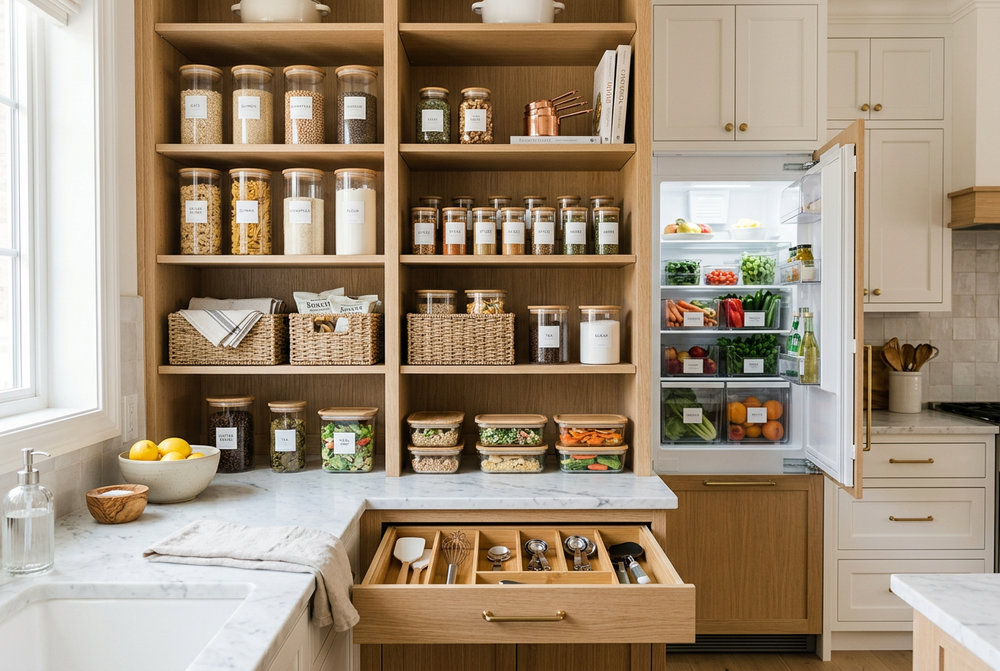
Habit 3: Give Fresh Ingredients a Visible Home
Food that disappears behind other containers is easy to forget.
Organize your refrigerator so ingredients are visible and accessible.
Consider grouping items by use:
-
Breakfast ingredients
-
Meal-prep components
-
Vegetables
-
Ready-to-eat foods
-
Leftovers
Avoid overcrowding shelves.
Choose storage containers appropriate for the foods you're keeping.
Remember that different types of produce have different storage needs.
A storage method that works for one ingredient may not be ideal for another.
Habit 4: Create a “Use Soon” Area
Designate a visible refrigerator space for ingredients you intend to use promptly.
This might include:
Half a cucumber.
An opened ingredient that needs refrigeration.
Vegetables intended for tomorrow's dinner.
A small portion of properly stored leftovers.
Check this area before deciding what to cook.
A simple visual reminder can make meal planning easier.
Habit 5: Learn Three Flexible Recipes
Some recipes are especially useful when you need to work with ingredients already available.
Vegetable Soup
A practical way to combine suitable vegetables, broth, herbs, and other ingredients.
Stir-Fry
A flexible format for vegetables, proteins, and sauces.
Grain Bowls
Combine a grain, vegetables, protein, and dressing.
These meals can help you use ingredients intentionally rather than buying a completely new set of groceries.
Always follow safe food-handling and cooking practices.
Habit 6: Store Leftovers Properly
Good intentions aren't enough if food isn't stored safely.
Divide large quantities into shallow containers for prompt cooling.
Refrigerate perishable leftovers within two hours, or within one hour if the surrounding temperature is above 90°F.
Keep your refrigerator at 40°F or below.
Most cooked leftovers should generally be used within three to four days when properly refrigerated.
Reheat leftovers to 165°F.
These guidelines help make leftover planning both practical and safe.
Habit 7: Label What You Freeze
Freezers can become places where forgotten meals disappear.
Label containers with:
Food Name
Date Prepared
Portion Information
Consider keeping a simple freezer inventory.
This helps you find what you already have before preparing or purchasing more.
Follow appropriate freezing, thawing, and reheating guidance for each food.
Habit 8: Choose Storage Based on Real Needs
Food storage is most useful when it solves a specific problem.
If you regularly prepare lunches, portion-friendly containers may be valuable.
If pantry items are difficult to find, clear or labeled containers may help.
If your refrigerator becomes crowded, appropriate organization bins may improve visibility.
Choose products based on how your household actually uses food.
The goal isn't owning more containers.
It's creating a system that helps you use what you already have.
Habit 9: Make One “Use What We Have” Dinner Each Week
Choose one evening when dinner begins with existing ingredients.
Don't start with a shopping list.
Start with the refrigerator.
Then build a meal around what's available and safe to use.
This can become a surprisingly creative routine.
It encourages flexibility and helps you discover combinations you might otherwise overlook.
Habit 10: Make Progress, Not Perfection
Some weeks will be organized.
Others won't.
Plans will change.
Food waste won't disappear completely.
That's okay.
The goal is to build habits that work in real life.
A little more planning.
A little better storage.
A little less overbuying.
Over time, those small decisions can make the kitchen feel more intentional.
Cookora™ Essentials for Thoughtful Kitchen Living
Consider practical products from these categories:
Food Storage Containers
For appropriately storing prepared ingredients and leftovers.
Pantry Organization
For making dry ingredients easier to locate.
Refrigerator Organization
For improving visibility and accessibility.
Kitchen Prep Tools
For preparing ingredients efficiently.
Reusable Drinkware
For everyday beverages at home or on the go.
Measuring Tools
For preparing suitable quantities and reducing unnecessary excess.
The Cookora™ Philosophy
At Cookora™, we believe thoughtful kitchen living isn't about achieving perfection.
It's about making everyday choices easier.
A container that helps you remember leftovers.
A pantry arrangement that shows what you already own.
A cutting board that makes preparing vegetables feel effortless.
These are small improvements, but they can support more intentional routines.
Final Thought
A kitchen that wastes less doesn't need to look perfect.
It simply needs to work with your life.
Buy thoughtfully.
Store appropriately.
Cook flexibly.
Use what you have.
And remember that even small changes can make everyday kitchen living feel more rewarding.
Waste less. Cook thoughtfully. Enjoy more.
Explore Cookora™ Food Storage & Kitchen Organization Essentials →
COOKORA™ — OUR EVERYDAY PHILOSOPHY
COOK BETTER. LIVE BEAUTIFULLY.
The most meaningful kitchen moments aren't always planned.
Sometimes they're found in the middle of an ordinary evening.
A dinner that comes together without stress.
A quiet morning with your favorite coffee.
A beautiful snack board shared with friends.
The comforting aroma of something baking.
A kitchen that feels a little more organized than yesterday.
At Cookora™, we believe thoughtful kitchen essentials should support these moments.
PREP WITH PURPOSE.
COOK WITH CONFIDENCE.
SERVE WITH STYLE.
LIVE BEAUTIFULLY.
Because a kitchen isn't simply where meals are made.
It's where everyday living comes together.
Cookora™ — Thoughtful Kitchen Essentials for Real Life.